
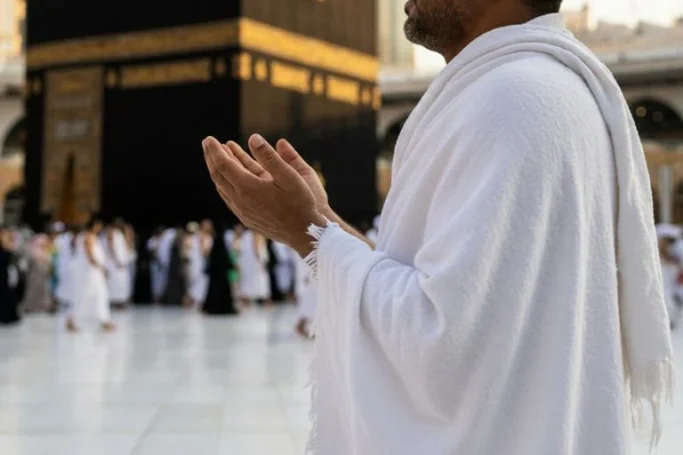
If you’re planning Hajj or Umrah, you’ve probably had this thought:
“What if I go all that way… and still miss the best moments to make dua?”
It’s a real worry. You save for years, organise time off work, arrange your Hajj and Umrah package, and then, in the middle of the crowds, it’s easy to feel lost or overwhelmed. You know these days in Makkah and Madinah are precious, but you are not always sure when to raise your hands and really pour your heart out to Allah.
Dua is powerful at every moment. But our Deen also teaches us that there are special times, places, and conditions in which dua is especially honoured, and many of these come together during Hajj and Umrah.
So, in this guide, we’ll walk through those key moments that are considered the best moments for making Dua:
- When to focus most on dua during Hajj and Umrah
- Where in the Haramain is strongly recommended
- Easy Arabic duas with transliteration and meaning
- How to build your own dua list before you travel
- How to check reliable Islamic guidance while you’re preparing
The aim is not to restrict your dua, but to help you leave Saudi Arabia feeling, “Alhamdulillah, I really tried to make the most of every chance Allah gave me.”
Why These Special Dua Times Matter So Much
For many pilgrims, one of the most important questions is: “When are my duas most likely to be accepted?”
You may only go for Hajj or Umrah once or a few times in your life. Learning the best times to make dua during Hajj and Umrah means:
- You do not waste precious moments on distractions.
- You remember to ask Allah for what truly matters to you.
- You can return home feeling that you gave your heart and soul to the journey.
Dua is not only for moments of hardship. It is a sign of your relationship with Allah, your trust in Him, and your hope for His mercy. The season of Hajj and Umrah is an ideal time to rebuild and strengthen that connection.
If you are preparing a personal dua list, it is helpful to save or print a short, authentic dua collection before you travel, so you are ready when these blessed times arrive.
Key Moments and Places to Prioritise Your Dua
Some of the most important times and places to focus on include:
- The Day of Arafah during Hajj
- During tawaf, especially between the Yemeni Corner and the Black Stone
- After tawaf, behind or near Maqam Ibrahim, if possible
- During sa’i between Safa and Marwah
- In sajdah (prostration) during any prayer
- In the last third of the night
- Between adhan and iqamah
- On Fridays (Yawm al-Jumu’ah)
- At Muzdalifah, after leaving Arafah (Hajj)
- In Masjid al-Haram and Masjid an-Nabawi in general
Each of these times combines a special place, a special time, or a special act of worship, all of which increase hope that the dua will be accepted.
Best Times to Make Dua During Hajj: The Day of Arafah
On the 9th of Dhul-Hijjah, pilgrims stand at Arafah; this is the heart of Hajj. The Prophet ﷺ said that the best supplication is the supplication on the Day of Arafah, showing the unique status of this day for dua.
For many people, the time at Arafah becomes the single most emotional part of their entire journey.
How to Spend the Day of Arafah
From after Dhuhr until Maghrib:
- Dedicate as much time as you can to dua.
- Stand, sit, or raise your hands facing the Qiblah, as is comfortable.
- Alternate between:
- Praising Allah (tahlil, tahmid, takbir)
- Sending salawat upon the Prophet ﷺ
- Making heartfelt personal duas in your own language
A well-known dhikr for this day is:
لَا إِلَهَ إِلَّا اللَّهُ وَحْدَهُ لَا شَرِيكَ لَهُ، لَهُ الْمُلْكُ وَلَهُ الْحَمْدُ، وَهُوَ عَلَىٰ كُلِّ شَيْءٍ قَدِيرٌ
Lā ilāha illallāhu waḥdahu lā sharīka lah, lahul-mulku wa lahul-ḥamd, wa huwa ‘alā kulli shay’in qadīr.
Repeat this often, and keep mixing it with your own duas for forgiveness, guidance, your family, and the Ummah.
Dua While Circling the Ka’bah: Tawaf as a Dua Opportunity
Another of the best times to make dua during Hajj and Umrah is whilst performing tawaf around the Ka’bah.
Dua During Tawaf
- You can make dua in any language during tawaf.
- There is no fixed dua for each round, despite common booklets.
- Avoid getting lost in long printed pages that stop you from feeling the real conversation with Allah.
The only specific dua authentically reported during tawaf is between the Yemeni Corner (Rukn al-Yamani) and the Black Stone (Hajar al-Aswad):
رَبَّنَا آتِنَا فِي الدُّنْيَا حَسَنَةً، وَفِي الآخِرَةِ حَسَنَةً، وَقِنَا عَذَابَ النَّارِ
Rabbana ātinā fi d-dunyā ḥasanah, wa fi l-ākhirati ḥasanah, wa qinā ‘adhāb an-nār.
“Our Lord, grant us in this world good and in the Hereafter good, and protect us from the punishment of the Fire.” (Qur’an 2:201)
This is a beautiful dua to repeat many times during Umrah rituals and throughout your journey.
After Finishing Tawaf
Once you have completed seven rounds:
- Pray two rak’ahs behind Maqam Ibrahim if space allows, or anywhere in the Haram.
- After these two rak’ahs, stay seated or stand, and use the calm moment to raise your hands and make dua.
If you are arranging your trip through Umrah Booking and reviewing different Umrah Packages, you can look for itineraries that allow you a few unhurried tawafs so you can benefit from these quiet moments.
Dua During Sa’i: Walking Between Safa and Marwah
When you climb Safa and face the Ka’bah, you can recite the verse:
إِنَّ الصَّفَا وَالمَرْوَةَ مِنْ شَعَائِرِ اللَّهِ
Inna ṣ-ṣafā wal-marwata min sha‘ā’irillāh… (Qur’an 2:158)
Then raise your hands, praise Allah, and say the known dhikr (Allahu Akbar, tahlil, etc.), repeating it and making personal duas in between. You do the same when you reach Marwah.
Between Safa and Marwah
During the walking itself:
- Fill your heart with dua for guidance, steadfastness, and forgiveness.
- Remember the story of Hajar (AS) searching for water for her child, and her complete trust in Allah.
- Ask Allah to grant you the same trust (tawakkul) and patience in your own life.
Inside the Haramain: Dua in Sajdah and After Salah
Whether you are in Makkah or Madinah, certain moments in the daily prayers are among the best times to make dua.
In Sajdah (Prostration)
The Prophet ﷺ said that a servant is closest to his Lord when he is in prostration, so we should increase our supplications in sajdah.
Practical tips:
- Say the required tasbih (Subḥāna Rabbiyal-A‘lā).
- Then, especially in nafl (voluntary) prayers, spend extra moments making dua.
- Many scholars allow dua in your own language in nafl salah; if you are unsure, ask a scholar you trust before travelling.
These quiet prostrations in Masjid al-Haram or Masjid an-Nabawi can become some of the most powerful memories of your trip.
After Fard Salah
After completing fard salah:
- Recite the recommended adhkar (SubhanAllah, Alhamdulillah, Allahu Akbar).
- Without rushing away, sit and make short, sincere duas.
- Because you are in the most blessed masjid on earth, this is an ideal time to ask Allah to accept your Hajj or Umrah, forgive your sins, and bless your family.
Late-Night Duas: The Last Third of the Night in Makkah and Madinah
Even at home, the last third of the night is a special time for dua. The Prophet ﷺ informed us that Allah descends to the lowest heaven in this part of the night and asks who is calling upon Him so He can answer, and who is seeking forgiveness so He can forgive.
When you are in Makkah or Madinah, this time becomes even more precious.
Practical tips:
- Use a local prayer timetable to estimate when the last third begins.
- Try to wake for Tahajjud in your hotel room, even if just 20–30 minutes before Fajr.
- Pray a few rak’ahs, then sit quietly and make dua.
These peaceful minutes, far from crowds and noise, can become among the most meaningful parts of your Hajj and Umrah journey.
Other Important Times to Make Dua During Hajj & Umrah
The time between the adhan and iqamah is considered a period when dua is not rejected.
Use this time to:
- Repeat the words of the adhan.
- Send salawat upon the Prophet ﷺ.
- Make a personal dua before the iqamah begins.
On Fridays (Yawm al-Jumu’ah)
Friday is special wherever you are, but being in Makkah or Madinah makes it even more blessed. Many scholars mention a special hour on Friday, especially close to Asr until Maghrib, when duas are answered.
On Fridays:
- Read Qur’an, especially Surah al-Kahf.
- Make abundant salawat.
- Focus on dua in the last hour before Maghrib.
At Muzdalifah (Hajj)
After leaving Arafah, pilgrims gather at Muzdalifah:
- You pray Maghrib and Isha combined.
- You collect pebbles for the Jamarat.
- You rest under the open sky and can make a quiet dua.
Remember that you are part of a huge gathering of pilgrims asking Allah for forgiveness and mercy, let your heart join them.
Simple Dua Ideas for Hajj and Umrah
You do not need long Arabic duas to benefit from the best times to make dua during Hajj and Umrah. Allah understands every language and every sincere heart.
Your list might include:
- Dua for forgiveness of all past sins.
- Dua for firm iman and a good ending.
- Dua for your parents, spouse, children, and family.
- Dua for halal rizq, relief from debts, and financial ease.
- Dua for protection from trials, diseases, and hardships.
- Dua for the Ummah, for oppressed Muslims, and for the guidance of humanity.
A very comprehensive and simple dua is:
رَبَّنَا آتِنَا فِي الدُّنْيَا حَسَنَةً، وَفِي الآخِرَةِ حَسَنَةً، وَقِنَا عَذَابَ النَّار
Rabbana ātinā fi d-dunyā ḥasanah, wa fi l-ākhirati ḥasanah, wa qinā ‘adhāb an-nār.
You can repeat this in tawaf, sa’i, in your room, and while travelling between Makkah and Madinah.
Practical Tips to Benefit from the Best Times to Make Dua
To benefit fully, prepare a written dua list, learn a few short Arabic duas, use your own language freely, mix general and specific duas, and try to combine blessed times and places (for example, dua in sajdah during the last third of the night in Masjid al-Haram).
To make sure you really benefit, consider these practical tips:
1. Prepare a Dua List Before You Travel
- Write categories: Iman, Dunya, Akhirah, family, health, rizq, Ummah, etc.
- Add names of people you promised to make dua for.
- Keep the list in your phone or a small notebook.
2. Learn a Few Short Arabic Duas
- Memorise concise Qur’anic and prophetic duas.
- Use transliteration if you struggle with Arabic, and keep practising.
3. Use Your Own Language Too
- Speak to Allah from your heart, in the language that comes naturally.
- Do not feel shy or limited; Allah hears you completely.
4. Balance Between General and Specific Duas
- Ask for general goodness (like Rabbana ātinā).
- Also ask for very specific things you need: guidance in a decision, healing for someone, ease in a situation.
5. Combine Times and Places
Try to combine multiple blessed elements, for example, making dua in sajdah inside Masjid al-Haram in the last third of the night. Time, place, and action all come together.
When you choose Umrah Packages with Ziyuf Al Rahman, look for itineraries that give you good rest, realistic schedules, and time in the Haramain, all of which help you benefit fully from these moments.
Checking Authentic Guidance and Travel Updates
For religious rulings, always speak to:
- Qualified imams or scholars in your local masjid.
- Recognised scholars whose works and institutions you trust.
For travel, health, and safety:
- UK pilgrims should monitor the official UK government page for Saudi Arabia travel advice, which is regularly updated with visa, health, and local information.
Final Thoughts
Learning about the best times to make dua during Hajj and Umrah is not about limiting your dua; you can and should call upon Allah at any moment. It is about recognising moments of extra mercy, so you give them special attention.
Whether you are:
- Standing at Arafah in tears
- Circling the Ka’bah in tawaf
- Walking between Safa and Marwah
- Bowing your head in sajdah in the Haramain
- Or waking in the last third of the night in your hotel room
…remember that Allah is near, hearing and responding in the way that is best for you.
Want to perform Umrah/Hajj this year? Ziyuf Al Rahman offers UK-based, fully supported Hajj and Umrah packages with trusted airlines, quality hotels, and on-the-ground assistance. So, you can stay focused on dua, tawaf, and worship.With a prepared heart, a thoughtful dua list, and awareness of these special moments, may your Hajj and Umrah journey be accepted, your sins forgiven, and your duas answered with goodness in this world and the next. Amin.