

When is Ramadan 2027?
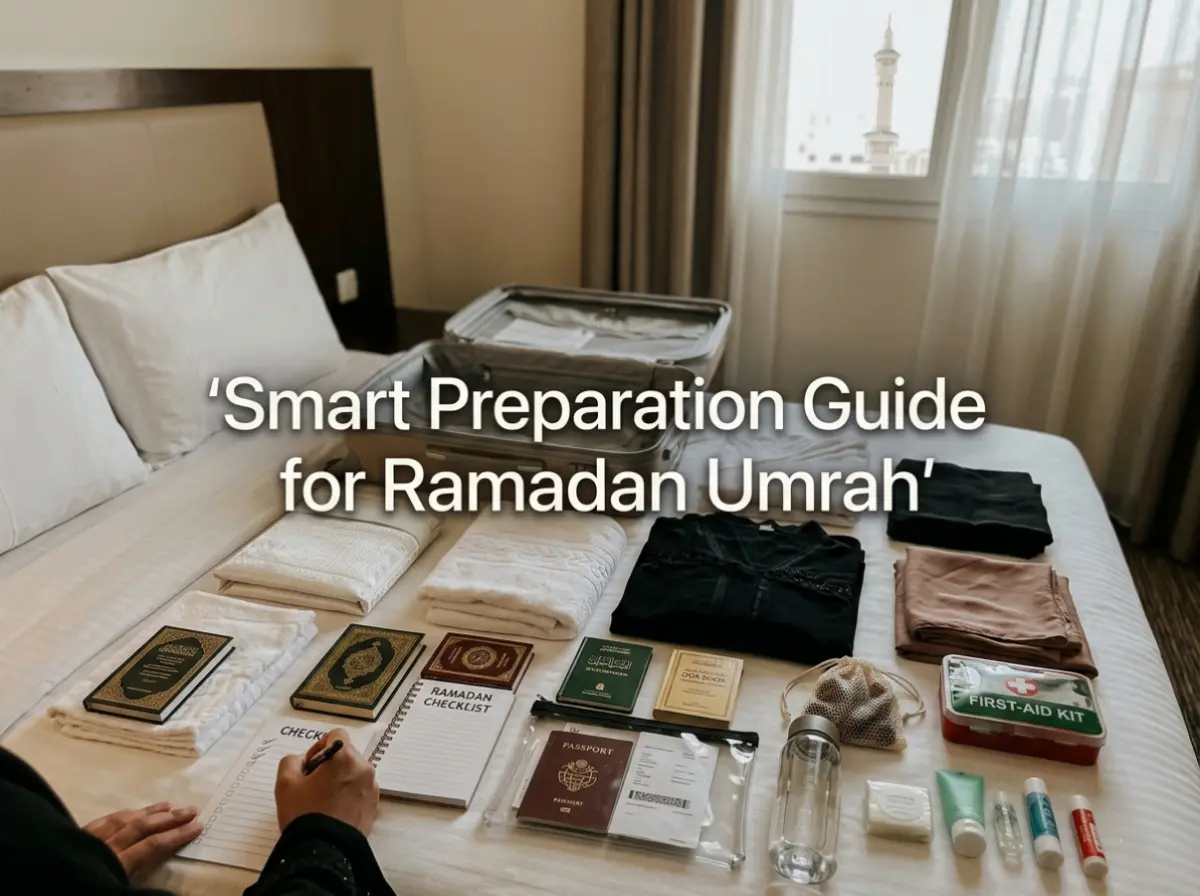
Ramadan 2027 is expected to begin on 8 February and end on 8 March 2027. UK Muslims planning Umrah in that window need to book a licensed operator, confirm Nusuk-linked accommodation, and begin visa steps at least four to six months before departure. The later you move, the fewer good options remain and the more you pay for what is left.
We see this happen every single year. Ramadan Umrah preparation does not begin in winter. It begins now.
Why Ramadan Umrah Carries Weight Like Nothing Else
The Prophet (peace be upon him) said: “Umrah in Ramadan is equal in reward to Hajj performed with me,” as reported in Sahih Bukhari and Sahih Muslim. Scholars are consistent that this means the magnitude of reward is equivalent, not that it replaces the obligatory Hajj for those who are able to perform it.
That hadith is why Makkah in Ramadan draws pilgrims from every part of the world. During Ramadan 2026, Saudi authorities confirmed 904,000 pilgrims performed Umrah on a single day in just the first week. Over 4.1 million worshippers gathered at the Grand Mosque on the 29th night alone.
Ramadan 2027 is expected to draw even larger numbers. You are not planning a holiday. You are planning to enter one of the most spiritually charged and logistically demanding environments on earth.
The Three Windows Inside Ramadan
Not every part of Ramadan in Makkah is the same experience. Knowing which window you are targeting changes every decision that follows.
The first 10 nights run from approximately 8 to 17 February 2027. Crowds are lighter, hotel rates are lower, and the spiritual atmosphere is fully present. For first-time Ramadan pilgrims, this window is often the most manageable entry point and still a deeply rewarding one.
The middle 10 nights run from 18 to 27 February. Intensity builds gradually. Rates climb but remain below peak. Many experienced pilgrims choose this window deliberately because they want the growing energy of late Ramadan without the extreme physical demands of the final stretch.
The last 10 nights begin around 28 February. Allah says in the Quran:
لَيْلَةُ الْقَدْرِ خَيْرٌ مِّنْ أَلْفِ شَهْرٍ
Laylatul Qadri khayrun min alfi shahr
“The Night of Decree is better than a thousand months.”
Surah Al-Qadr, Ayah 3
Seeking that night at the Grand Mosque is the reason millions push through the crowds and the cost. But this window demands the highest budget, the earliest possible booking, and real physical preparation. Nusuk permit slots for this period open and close in minutes. Hotel rates in these nights reach two to three times the early Ramadan price.
Pick your window before you do anything else.
What Makes Ramadan 2027 Easier for UK Pilgrims
Ramadan 2027 falls in February, which puts daytime temperatures in Makkah between 20 and 30 degrees Celsius. That is a real advantage for pilgrims coming from the UK, where the body is used to cold and damp. Summer Umrah in 40-plus degree heat is a different challenge entirely.
The cooler weather makes longer periods of tawaf and sa’i more physically sustainable. Night temperatures in February drop to around 18 degrees, which means the late-night ibadah after Tarawih is genuinely comfortable.
Moving along, the Saudi Nusuk platform now manages Umrah permits, hotel verification, and pilgrim tracking as one digital system. That makes independent booking more accessible than it was five years ago. What it does not make easier is securing the best accommodation at a reasonable price under competition from millions of pilgrims worldwide. That is where a licensed operator like Ziyuf Al Rahman removes the risk from a process that has real consequences if it goes wrong.
The Preparation Timeline That Actually Works
Ramadan 2027 Umrah preparation runs across four phases, and each one depends on the one before it. Miss a phase and the next one gets harder or falls apart completely.
Phase 1: Decision and Booking
Pick your travel window, then reach out to a licensed operator like Ziyuf Al Rahman to check availability and confirm your deposit. Hotels within 200 metres of the Haram are the first to sell out, often before most UK pilgrims have even started comparing prices. Booking with a refundable deposit while you finalise dates is far smarter than waiting for certainty and finding nothing good left.
Phase 2: Documents and Visa
Your British passport needs at least six months of validity from your travel date. The Saudi authorities also require a confirmed, Nusuk-linked hotel booking before your visa application can progress. Women under 45 travelling without a mahram can travel through approved group packages under a policy Saudi Arabia has formally maintained.
Gather these before your visa appointment:
- Passport-size photographs on a white background
- Meningitis ACWY vaccination certificate, which is mandatory for entry
- Flight confirmation tied to your operator’s group booking
- Marriage certificate if travelling as a couple
Get your meningitis vaccination at least 10 days before your appointment. It needs time to register correctly on your health record.
Phase 3: Physical and Spiritual Preparation
Umrah in Ramadan 2027 while fasting is physically demanding in a way that surprises most first-timers. You will cover four to eight kilometres daily on marble floors. Tawaf at ground level runs roughly 1.75 kilometres per circuit, and you will complete seven.
A daily 30 to 45 minute walk in the weeks before departure builds the stamina you will need. Pilgrims who skip this step often struggle by day three, combining fasting with late-night Tarawih and early Fajr at the mosque. Your body needs to be ready for what your heart intends.
Phase 4: Final Checks (Two Weeks Before Departure)
Confirm your Nusuk pilgrim registration and all linked documents are correct. Sort your Saudi Riyals through a UK bank or exchange service before you fly. Airport exchange rates in Jeddah run noticeably higher than high street rates, and you will need cash from your first hour in Makkah.
Spiritual Preparation Changes the Whole Experience
Pilgrims who treat spiritual preparation as something to handle on the plane usually arrive in Makkah feeling rushed and unprepared. The ones who prepare at home arrive with a different quality of presence and that shows in their worship.
Start by learning the duas for each stage of Umrah before you travel. Reading them from your phone during tawaf for the first time breaks your focus and pulls you out of the moment. Memorise the key ones, or at minimum read through them enough times that they feel familiar.
Make sincere tawbah before departure. The journey begins in the heart before it begins at the airport. Reciting Salawat on the Prophet (peace be upon him) consistently in the weeks leading up to the trip is a simple habit that carries real weight.
Reading a short account of Ibrahim (peace be upon him) and his connection to the Ka’bah is worth your time too. When you first see the Ka’bah and understand what Ibrahim and his son Ismail (peace be upon them) built and what they sacrificed, the experience of standing there becomes something far deeper.
A widely practised supplication for the moment of first sighting the Ka’bah:
Allahumma zid haadhal bayta tashreefan wa ta’zeeman wa takreeman wa mahaabatan
“O Allah, increase this House in honour, reverence, nobility and awe.”
Memorise it. That first sighting is not the moment to be reaching for your phone.
How the Nusuk Platform Works for UK Pilgrims
Nusuk is now the mandatory digital gateway for all Umrah pilgrims worldwide. Your hotel booking must be registered and verified within the platform before your visa application moves forward. A confirmation email from the hotel alone is not enough.
The hotel must be a Nusuk-approved partner, and the booking must appear correctly on your Nusuk profile. Ziyuf Al Rahman handles that linkage as part of the package process. Solo bookings place that responsibility entirely on you, and an error at this stage can delay or cancel your visa application without warning.
The Four Steps to Perform Umrah:
Every pilgrim performs the same four steps in the same order, regardless of experience. Knowing each one before you arrive in Makkah means your mind stays on worship, not procedure.
Step 1: Ihram
Ihram is both a physical state and a spiritual entry point. Men wear two unstitched white cloths: one wrapped around the waist, one draped over the upper body. Women wear their normal modest clothing, with the face and hands left uncovered.
You form your niyyah (intention) for Umrah and begin reciting the Talbiyah at or before the Miqat, the boundary around Makkah that no pilgrim may cross without being in a state of Ihram. UK pilgrims flying into Jeddah typically pass the Miqat on the flight path and enter Ihram on the plane or at King Abdulaziz International Airport.
Crossing the Miqat without Ihram requires a penalty offering known as dam, so confirm the timing with your operator before you board. Once in Ihram, perfume, cutting hair or nails, covering the head (for men), and intimacy between spouses all become prohibited until the state is lifted.
The Talbiyah:
Transliteration: Labbayk Allahumma labbayk, labbayka laa shareeka laka labbayk, innal hamda wan ni’mata laka wal mulk, laa shareeka lak
Meaning: “Here I am, O Allah, here I am. Here I am, You have no partner, here I am. Verily all praise, grace and sovereignty belong to You. You have no partner.”
Recite it continuously from your point of Ihram until you begin Tawaf.
Step 2: Tawaf
Tawaf is seven counter-clockwise circuits around the Ka’bah, with the Ka’bah kept on your left at all times. You must be in wudu throughout, and each circuit begins at the Black Stone.
Face the Black Stone at the start of each circuit and say “Bismillah, Allahu Akbar.” Touch it if you can reach it without causing harm to those around you. When the crowd makes that impossible, raise your right hand toward it, say “Allahu Akbar,” and continue walking.
Men walk briskly with short steps (Ramal) for the first three circuits, then at a normal pace for the remaining four. Women walk normally throughout. After seven circuits, pray two rakats near Maqam Ibrahim and drink Zamzam water.
Step 3: Sa’i
Sa’i is seven passes between the hills of Safa and Marwa, starting at Safa and finishing at Marwa. Each pass in one direction counts as one, so four go toward Marwa and three return to Safa.
Begin at Safa by facing the Ka’bah and reciting:
إِنَّ الصَّفَا وَالْمَرْوَةَ مِنْ شَعَائِرِ اللَّهِ
Innas-Safa wal-Marwata min sha’aa’irillah
“Indeed, Safa and Marwa are among the symbols of Allah.”
Surah Al-Baqarah, Ayah 158
Make dua, then walk toward Marwa. Men jog lightly between the two green markers on the path. Women walk the full distance.
Step 4: Halq or Taqsir
Halq means shaving the head completely. Taqsir means trimming at least a finger’s length of hair from all around the head. Men may choose either, though shaving carries the greater reward. Women trim a small portion of hair only. Completing this step lifts the state of Ihram and your Umrah is complete.
When to Enter the Haram During Ramadan 2027
The mosque fills from Asr onward every day of Ramadan, peaking sharply at Maghrib as fasting pilgrims break their fast and fill every inch of space. Going in without a timing plan means standing in outdoor courtyards for prayers you could have been inside for.
The best window for Tawaf is between 11pm and 2am, after the post-Tarawih crowd has eased. For a good spot inside the mosque at Tarawih, arrive at least 90 minutes before Isha.
During the last 10 nights, the ground-level mataf closes to general pilgrims during peak hours to manage crowd density. You may complete your Tawaf on the upper floors. That is fully valid and accepted. What matters is completing the seven circuits correctly, not which level you are on.
Mistakes That Cost Pilgrims Their Focus
These come up repeatedly, and all of them are avoidable with a little prior knowledge.
Stopping mid-Tawaf to reach the Black Stone. Halting your circuit to push toward the Black Stone disrupts hundreds of pilgrims behind you and has no support in the Sunnah. Raise your right hand, say “Allahu Akbar,” and keep your circuit moving.
Joining a loud group dua during Tawaf. Following a leader who shouts duas into a crowd breaks the concentration of everyone around you. Tawaf is personal worship. Make your own quiet dua and stay present in it.
Touching the Ka’bah walls seeking blessings. The Prophet (peace be upon him) engaged only the Black Stone and the Yemeni Corner during Tawaf, as reported in Sahih Bukhari. No other part of the Ka’bah carries this practice from him.
Losing wudu and continuing Tawaf. Tawaf without wudu is not valid. Check your state before you begin, particularly after long periods waiting in crowds.
Rushing past Multazam. The wall between the Black Stone and the Ka’bah door is among the most powerful places on earth to make dua. Many pilgrims walk past it because they do not know what it is. Spend time there with your chest and hands against the wall, asking Allah for whatever is in your heart. That moment is worth more than any photograph you will take on the trip.
Ready to Plan Your Umrah in Ramadan 2027?
Ziyuf Al Rahman handles the Nusuk hotel linkage, visa documentation, and full ground logistics for Ramadan Umrah packages from the UK. Spaces fill months before the season opens, particularly for the last 10 nights.
Speak to the team now to check availability for your preferred window and get your preparation started on the right footing.
————————
Related Articles:
- Best Times to Make Dua During Hajj and Umrah
- Top 12 Must-See Places in Makkah
- Ihram Guide for UK Muslims
- Important Dates in the Islamic Calendar
- How Many Umrahs Can Be Performed in One Day
- How to Book Umrah from London with a low Deposit
- How Long Does Umrah Take from the UK – Complete Guide
- Umrah Visa 2026 for UK Residents – Fees, Eligibility & Application Process
- The Spiritual Significance of the Umrah Pilgrimage in Islam
- What to Do on Laylatul Qadr – A Guide for Umrah Pilgrims
- Fasting During Umrah – Key Facts
- How to Prevent Heatstroke During Umrah and Hajj
- How to Perform Umrah – Step by Step Guide for UK Muslims
- Roza e Rasool Visiting Time – Latest Rules for Men & Women
- The Main Gates of Masjid Al Haram
- Difference Between Hajj and Umrah
- How Much Does an Umrah Package Cost from the UK
- Top 10 Umrah Mubarak Gift Ideas to Welcome Loved Ones Home
- Best Month to Go for Umrah 2026 from the UK
- Umrah Packages for Elderly Pilgrims from the UK
- How to Apply for an Umrah Visa from the UK
- What Is Umrah – Meaning, Rituals & Rules
- Best Hotels Near Masjid Nabawi in 2026
- How to book a Rawdah appointment