
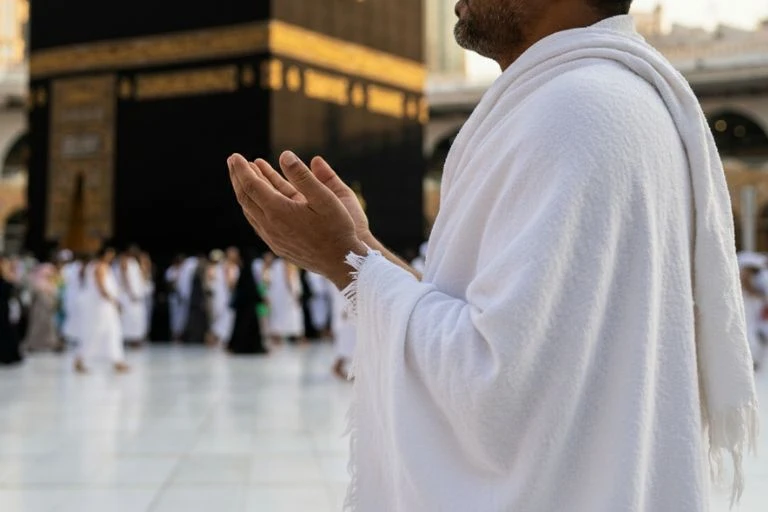

The best times to make dua during Hajj and Umrah are: the Day of Arafah (from Dhuhr to Maghrib), during Tawaf between the Yemeni Corner and the Black Stone, on Safa and Marwah, in sajdah, between the adhan and iqamah, on Fridays near Asr, and in the last third of the night. These are moments where the doors of acceptance are widely open, and you are already standing in the most blessed places on earth.
Why Timing Your Dua Matters
Here is something many pilgrims miss: dua is always valid, but certain moments carry extra weight. Think of it like the difference between calling a friend at a random hour versus calling when you know they are free, attentive, and waiting to hear from you.
Allah is never absent, but He has made specific times more merciful. When you combine a blessed place (Makkah or Madinah) with a blessed time (Arafah, or the last third of the night) and a sincere heart, you have a very powerful combination.
UK pilgrims often travel for Umrah in shorter windows, sometimes five to ten days. You may not have the luxury of time. Knowing exactly when to pause and pour your heart out means you return home knowing you did not miss the moments that mattered most.
What the Quran Says About Dua
Allah says in the Quran:
Wa idhā sa’alaka ‘ibādī ‘annī fa’innī qarīb. Ujību da’wata d-dā’i idhā da’ān.
“And when My servants ask you concerning Me, indeed I am near. I respond to the invocation of the supplicant when he calls upon Me.”
(Surah Al-Baqarah, 2:186)
This verse is your foundation. You are not asking a distant Lord. You are speaking to One who is already listening. During Hajj and Umrah, that closeness is felt even more deeply, which is why every pilgrim should come prepared.
The Day of Arafah: The Most Powerful Time for Dua
If you only remember one thing from this entire guide, let it be this: the afternoon of the Day of Arafah is the greatest time for dua in the entire Islamic calendar.
The Prophet (peace be upon him) said: “The best dua is the dua on the Day of Arafah.” This is reported in Tirmidhi and is one of the most widely referenced statements about the virtue of this day.
You will be standing on the plain of Arafah between Dhuhr and Maghrib. The sun is usually intense. The crowd is enormous. And yet, that window, specifically those few hours, is when the mercy of Allah descends in a way that scholars describe as unmatched at any other point in the year.
What to Do on Arafah
- Face the Qiblah, raise your hands, and make sincere, personal dua in any language you feel comfortable with.
- Repeat Tahlil: “There is no god but Allah.”
- Use the most recommended dua of Arafah:
Lā ilāha illallāhu waḥdahu lā sharīka lah, lahul-mulku wa lahul-ḥamdu wa huwa ‘alā kulli shay’in qadīr.
“There is no god but Allah, alone, with no partner. To Him belongs all sovereignty and all praise, and He has power over all things.”
Do not just recite Arabic phrases you have memorised. Pause. Think of your family back Home. Think of the people you promised to make dua for. Speak to Allah in your own words.
Do not spend this time on your phone. We say this with care, not judgement. Many pilgrims later describe Arafah as the moment they wish they had stayed more present.
Muzdalifah: The Overlooked Window
After leaving Arafah, you travel to Muzdalifah for the night. Most pilgrims focus on collecting pebbles and resting. But Muzdalifah is also a confirmed time of accepted dua.
The Quran directly mentions making dhikr (remembrance) at Muzdalifah:
Fa idhā afaḍtum min ‘Arafātin fadhkurullāha ‘indal-Mash’aril-Ḥarām.
“Then when you pour forth from Arafat, remember Allah at Al-Mash’ar Al-Haram (Muzdalifah).”
(Surah Al-Baqarah, 2:198)
After Fajr at Muzdalifah, face the Qiblah and spend time in dua before leaving for Mina. This is a short but blessed window that many pilgrims miss simply because they are tired or rushing.
A practical tip for UK pilgrims: the time difference between the UK and Saudi Arabia is around three hours in summer. Your body may still be adjusting. Even so, prioritise staying awake for Fajr at Muzdalifah and use those quiet minutes before sunrise. The stillness there is unlike anything back home.
Dua During Tawaf and After
Tawaf is where most pilgrims feel it. You are circling the Kaabah, heart pounding, eyes filling up, and the whole world feels very small. We have seen this moment change people completely, and it is one of the reasons we love what we do at Ziyuf Al Rahman.
Here is what many pilgrims do not realise: the entire duration of Tawaf is open for personal dua. There is no single fixed supplication for each round. You can speak to Allah in English, in Urdu, in your own words, and it counts.
Dua between the Yemeni Corner and the Black Stone
This short stretch (from Al-Rukn al-Yamani to Al-Hajar al-Aswad) is the most recommended spot for a specific dua during Tawaf. The Prophet (peace be upon him) recited this in every circuit:
Rabbanā ātinā fid-dunyā ḥasanatan wa fil-ākhirati ḥasanatan wa qinā ‘adhāban-nār.
“Our Lord, give us good in this world and good in the Hereafter, and protect us from the punishment of the Fire.”
(Surah Al-Baqarah, 2:201)
Say it every round. It covers your dunya and your akhirah in a single breath, and that is honestly hard to top.
Dua passing the Black Stone
Each time you pass Al-Hajar al-Aswad, raise your right hand and say:
Bismillāh, Allāhu Akbar.
“In the name of Allah, Allah is the Greatest.”
You will almost never get close enough to touch or kiss the Black Stone (the crowds are genuinely intense, especially during peak season). Gesturing from a distance is fully accepted and is actually what the Prophet (peace be upon him) himself did when the crowd was thick. Do not push or hurt anyone trying to reach it.
After Tawaf: Two Rak’ahs at Maqam Ibrahim
Moving along to what many people rush past: after your seven circuits, pray two rak’ahs behind Maqam Ibrahim. Then, right there, raise your hands and make dua. You have just completed an act of worship, your heart is soft, and you are standing metres from the Kaabah. That combination is rare and powerful.
We always tell our pilgrims: do not pick up your phone the moment Tawaf ends. Sit with that feeling for a few minutes and ask Allah for everything and everyone on your list. Your family back home, the friend who is unwell, the exam your child is sitting next month. This is the time.
Zamzam: The Dua Moment Nobody Talks About
After your two rak’ahs, head to the Zamzam station. But before you drink, stop and make your intention clear. The Prophet (peace be upon him) said Zamzam water is “for whatever it is drunk for,” reported in Ibn Majah.
So ask. Ask for health and shifa and barakah in your rizq and clarity in your decisions. Then drink facing the Qiblah, in three slow breaths.
Dua on Safa and Marwah During Sa’i
Sa’i is the walk between Safa and Marwah, seven times, retracing the steps of Hajar (may Allah be pleased with her). And that context matters. She was alone, desperate, and completely reliant on Allah. Then the water came.
When you climb Safa at the start of your Sa’i, face the Kaabah and raise your hands. This is a confirmed dua time. The Prophet (peace be upon him) began by reciting:
Innas-Safā wal-Marwata min sha’ā’irillāh.
“Indeed, Safa and Marwah are among the symbols of Allah.”
(Surah Al-Baqarah, 2:158)
Then he recited the following, repeating it three times on Safa and again on Marwah:
Lā ilāha illallāhu wahdahu lā sharīka lah, lahul-mulku wa lahul-hamdu wa huwa ‘alā kulli shay’in qadīr.
“There is no god but Allah, alone, with no partner. To Him belongs all sovereignty and all praise, and He has power over all things.”
Between each repetition on Safa and Marwah, raise your hands and make personal dua. This is your moment to be completely honest with Allah. No script required.
Dua during the Walk Between Safa and Marwah
The walking sections between the two hills are also open for dua and dhikr. You do not need to stay silent or wait until you reach each hill. Many pilgrims quietly recite Salawat on the Prophet (peace be upon him) and personal supplications throughout the walk, and that is a sound and widely practised approach.
But here is the catch: Sa’i is physically tiring, especially for older pilgrims or those travelling from the UK who are still adjusting to the heat. Do not let tiredness stop you from using this time. Even quiet, whispered dua counts and is heard.
Dua in Sajdah: The Closest You Get to Allah
This one surprises many people. The Prophet (peace be upon him) said: “The closest a servant is to his Lord is when he is in prostration, so make much dua in it,” reported in Sahih Muslim.
Every single salah you pray in Masjid al-Haram or Masjid an-Nabawi gives you this opportunity. You are already in the holiest places on earth and then you go into sajdah, which is itself the closest position to Allah.
Use your sajdah. Ask in English if your Arabic is limited. Allah understands every language and every broken, stumbling word from a sincere heart.
The Last Third of the Night in Makkah
This is one of the most powerful windows available to you and it happens every single night of your trip. The Prophet (peace be upon him) said that Allah descends to the lowest heaven in the last third of the night and calls out: “Who is calling upon Me, that I may answer? Who is asking of Me, that I may give? Who is seeking My forgiveness, that I may forgive?” Reported in Sahih Bukhari and Sahih Muslim.
In Makkah, that window typically falls between around 2:00 am and Fajr (times vary by season). We know that after a full day of Tawaf and walking and heat, getting up feels almost impossible. But consider this: you flew from the UK, saved for this trip, and waited years for this chance. One night of Tahajjud in Masjid al-Haram, with the Kaabah in front of you and the last third of the night around you, is something you will carry for the rest of your life.
Set your alarm. Pray two rak’ahs. Then sit and ask.
A Note on Praying in Masjid an-Nabawi
If your package with Ziyuf Al Rahman includes Madinah (and most do), the same last-third window applies there. The rawdah (the area between the Prophet’s grave and his pulpit) is described in a hadith reported in Sahih Bukhari as a garden from the gardens of Paradise. Making dua there, especially in the last third of the night, combines multiple layers of blessing at once.
Other Times Your Dua Is Especially Accepted
These are shorter windows, but do not overlook them. Every one of these happens naturally within your daily rhythm during Hajj or Umrah.
Between the adhan and iqamah. The Prophet (peace be upon him) said: “Dua between the adhan and iqamah is not rejected,” reported in Tirmidhi. You will hear the adhan multiple times a day in Makkah. Use those minutes before the iqamah rather than standing and waiting.
On Fridays, near the time of Asr. There is a hidden hour on Friday (scholars differ on its exact timing, but the period near Asr is widely cited) when dua is accepted. If your trip falls over a Friday, which is likely given most UK packages run seven to fourteen days, treat that afternoon as a priority dua window.
When it rains. Rain is a mercy from Allah and dua during rainfall is reported as a time of acceptance. Makkah does receive rainfall, particularly outside the summer peak. If it rains during your trip, step outside (or stand near an open area of the masjid) and raise your hands.
After every obligatory salah. You are in a state of having just worshipped Allah. That freshness matters. Make a short, sincere dua before you get up from your prayer mat.
A Simple Dua Checklist for Your Trip
Keep this somewhere accessible on your phone or in a small notebook:
- Dua upon first seeing the Kaabah (this moment is confirmed as a time of acceptance)
- Dua between Yemeni Corner and Black Stone in every Tawaf circuit
- Dua on Safa and Marwah at the start of each hill
- Dua in sajdah during every salah
- Dua after drinking Zamzam
- Dua in the last third of the night
- Dua between adhan and iqamah
- Dua on the plain of Arafah (Hajj only)
- Dua at Muzdalifah after Fajr (Hajj only)
Write your personal list before you travel. Think of every person and every need you want to bring to Allah. Bring that list into every single one of these moments.
Plan Your Journey with Ziyuf Al Rahman
We know how much this trip means to you. It is not just a holiday and it is not just a package. It is years of saving and planning and waiting, wrapped into the most important journey of your life.
At Ziyuf Al Rahman, we handle the logistics (flights, hotels, ground transport, visa, and guided support on the ground) so you can focus entirely on what you came for: ibadah, reflection, and these precious dua moments we have walked through together.
Speak to our team today and let us help you plan a journey you will carry with you long after you return home inshallah.
————————
Related Articles:
- Top 12 Must-See Places in Makkah
- Important Dates in the Islamic Calendar
- How to Spend the Day of Arafah
- Ihram Guide for UK Muslims
- Umrah Visa 2026 for UK Residents – Fees, Eligibility & Application Process
- Fasting During Umrah – Key Facts
- How to Prevent Heatstroke During Umrah and Hajj
- How to Perform Umrah – Step by Step Guide for UK Muslims
- Roza e Rasool Visiting Time – Latest Rules for Men & Women
- Smart Preparation Guide for Ramadan Umrah 2027 UK
- The Main Gates of Masjid Al Haram
- Step by Step Hajj Guide for first time Pilgrims
- Best Hajj Essential Apps
- Difference Between Hajj and Umrah
- Top 10 Umrah Mubarak Gift Ideas to Welcome Loved Ones Home
- Best Month to Go for Umrah 2026 from the UK
- What Is Umrah – Meaning, Rituals & Rules
- How Many Umrahs Can Be Performed in One Day
- How to book a Rawdah appointment
- Miqat points for Umrah from the UK