
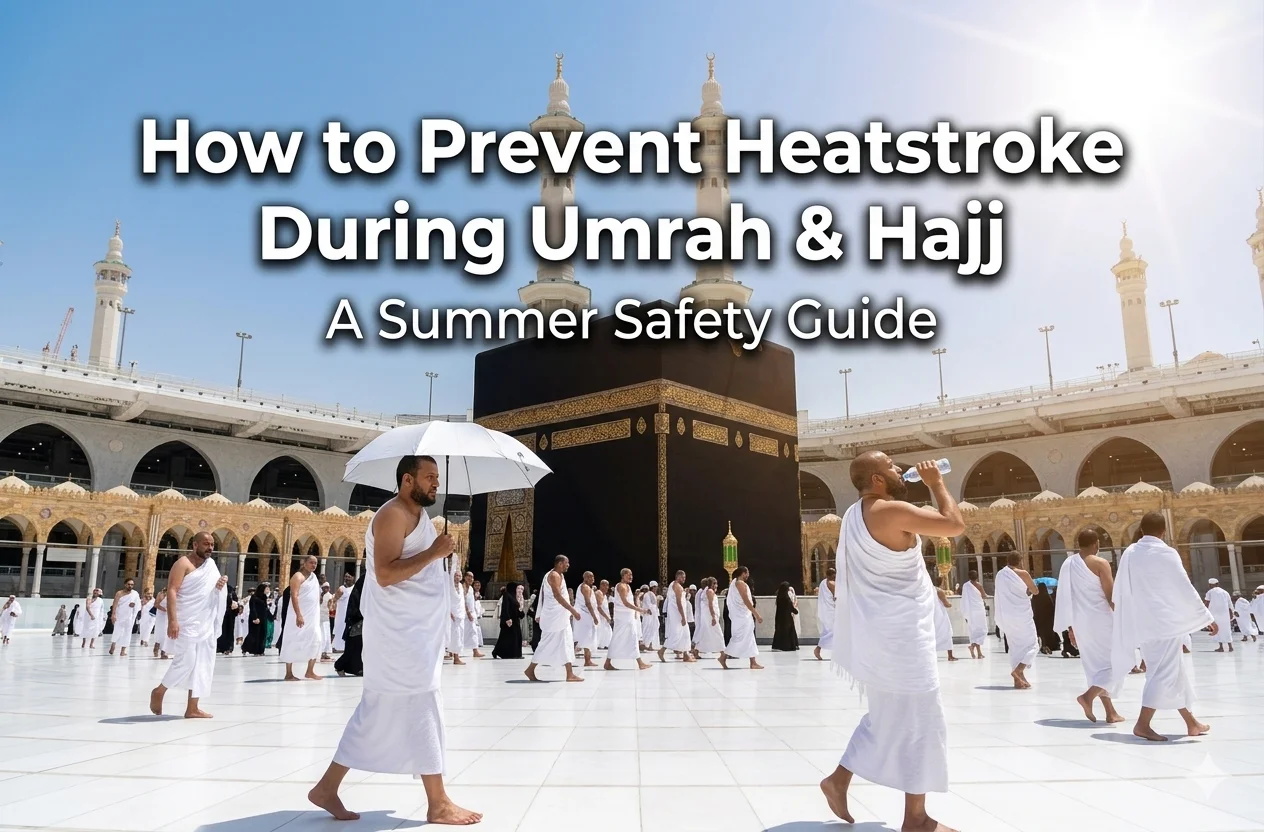

Drink at least 500ml of water every hour when temperatures exceed 40°C, avoid being outdoors between 11am and 3pm, wear loose light-coloured clothing, carry a misting spray and umbrella, and learn the early signs of heat exhaustion. These five habits, done consistently, protect you.
Most Pilgrims Do Not See It Coming
You pack your ihram, your prayer beads, your duas. You double-check your passport and your booking confirmation. But somewhere in all that preparation, the heat does not get the attention it deserves, and that gap has cost lives.
During the 2024 Hajj season, over 1,300 pilgrims died, with extreme heat identified as the primary factor. That is not written here to frighten you. It is written because you deserve to know the truth before you travel.
Back home in the UK, your body is used to grey skies and 14°C mornings. Makkah in June and July regularly hits 43°C to 48°C, with nights that barely cool below 30°C. That is not just hot. That is a different world, and your body will need time and help to cope with it.
What Heatstroke Actually Is
A lot of people confuse feeling hot and tired with heatstroke. They are not the same thing. Heat exhaustion is the warning. Heatstroke is the emergency.
Heat exhaustion shows up as heavy sweating, dizziness, nausea, weakness, and pale or clammy skin. Your body is struggling but still fighting. This is the stage where you stop, sit down, drink water, and cool yourself. Miss this window, and things escalate fast.
Heatstroke is what happens next if you keep going. Sweating may stop completely. The skin goes hot and dry. Confusion sets in, and in serious cases, consciousness fades. At that point, you need emergency medical help, not just a cold drink.
But here is the catch: pilgrims are physically active during the rituals. Tawaf around the Kaaba and Sa’i between Safa and Marwa both require walking, sometimes for over an hour, in crowded and warm conditions. You are also emotionally overwhelmed (which is completely natural), and that emotional intensity makes it easier to ignore what your body is telling you.
Protecting Your Health Is Part of Your Ibadah
Islam does not ask you to endure preventable harm. Caring for your body is an obligation, not a luxury.
The Prophet (peace be upon him) said: “Your body has a right over you.” (Reported in Sahih Bukhari) We often think of devotion as pushing through discomfort. But this hadith reminds us that looking after yourself is itself an act of obedience to Allah (SWT).
On top of that, Allah (SWT) says in the Quran:
Wa laa tulqoo bi-aydeekum ilat-tahlukah
“And do not throw yourselves into destruction.”
(Surah Al-Baqarah, 2:195)
Scholars widely understand this verse to include protecting yourself from avoidable harm.
Hydration Is Your First Line of Defence
You cannot out-pray dehydration. By the time you feel thirsty in 45°C heat, your body is already running behind.
The general guidance for pilgrims is to drink at least 250ml of water every 15 to 20 minutes during outdoor activity. Do not wait until rituals are over. Carry a small bottle in your bag and sip constantly, even when you do not feel the urge.
A few things to watch out for:
- Avoid very cold water when overheated. It can cause stomach cramps and slow you down. Room temperature or slightly cool water is safer.
- Zamzam water is widely available in the Haram. Drink it regularly. Many pilgrims report it keeps them going through long periods of worship (and there is barakah in it, so drink with intention).
- Avoid caffeine and fizzy drinks during the day. They speed up fluid loss and leave you more exposed.
Your urine colour is a reliable guide. Pale yellow means you are hydrated. Dark yellow or amber is a warning sign.
Time Your Rituals Around the Heat
This is the single most practical change you can make. The sun in Makkah between 11am and 3pm is a completely different beast to the morning and evening sun.
If you have flexibility in when you perform Tawaf or Sa’i, choose early morning (after Fajr) or after Asr. The Masjid al-Haram has air-conditioned indoor floors, and using those options during peak heat hours is not cutting corners. It is smart planning.
Moving along, consider breaking longer rituals into two shorter sessions with a rest in between. Many pilgrims try to complete everything in one go out of eagerness. But pacing yourself means you actually finish the rituals, rather than ending up in a medical tent halfway through.
What You Wear Matters More Than You Think
Loose, lightweight, light-coloured clothing reflects heat rather than trapping it. For men in ihram, the two white unsewn cloths actually serve this purpose well when the fabric is breathable cotton.
For sisters, the key is layering light fabrics rather than heavy ones. A thin cotton abaya keeps you cooler than a thick polyester one, even though both provide the same coverage.
On top of that, carry these two items at all times:
- A compact umbrella or parasol. Direct sun on your head and neck is one of the fastest routes to heat exhaustion. Shade matters enormously.
- A misting spray bottle filled with water. Spraying your face, neck, and wrists every 15 to 20 minutes brings your skin temperature down quickly. You will see pilgrims with these all over the Haram, and there is a reason for that.
Rest Is Not Optional
UK pilgrims often arrive with a packed schedule. Every hour accounted for, every ritual planned back to back. We completely understand that impulse. You have saved, planned, and waited for this trip. But here is the catch: your body needs recovery time in the heat, and skipping rest shortens your entire trip.
Rest in air-conditioned spaces between rituals. Your hotel room, the air-conditioned sections of the Haram, and the cooler basement levels are all there for you to use.
Sleep properly at night. Heat-related illness becomes significantly more likely when you are already fatigued. A rested pilgrim performs better and stays safer.
Watch the People Around You
Heatstroke does not always announce itself to the person experiencing it. Confusion is one of the symptoms, which means someone in danger may not know they are in danger.
Look out for the elderly pilgrims around you, and for anyone travelling with young children. Both groups are far more vulnerable to heat illness. If you see someone sitting on the ground looking confused, sweating heavily, or with very dry skin and a glazed expression, get them to shade and water immediately and alert the nearest medical team.
The Haram has medical stations positioned throughout the site. Saudi medical teams are trained and present during all peak periods. Do not hesitate to approach them.
Who Needs to Be Extra Careful
Not every pilgrim carries the same level of risk. Knowing where you sit on that scale changes how you prepare.
You need a more careful plan if you are over 60 (the body’s cooling system slows down with age and that gap widens fast in 45°C heat), if you have diabetes, heart disease, high blood pressure, or kidney problems, or if you take regular medication. Some blood pressure tablets and antihistamines reduce your ability to sweat, and that is a real danger in Makkah. Travelling with young children also puts extra responsibility on you, because their bodies overheat much faster than adults.
If any of that applies to you, a quick appointment at your GP in London or Greater Manchester before you fly is genuinely worth it. Ask them to review your medications in the context of extreme heat. Most GPs are happy to do this, and it takes less than 15 minutes.
If Someone Around You Shows Signs of Heatstroke
This is the part we hope you never need, but you should know it anyway.
Move them to shade or an air-conditioned space straight away. Get as many layers off as possible. Cool their skin using a misting spray, wet clothes on the neck and wrists, or steady fanning (all three together work faster than any single method). Give water only if they are fully conscious and able to swallow. Then get to the nearest Saudi medical team without delay, and stay with that person until help arrives.
The Saudi Ministry of Health positions medical teams at the Haram, Mina, Arafat, and Muzdalifah during both Hajj and Umrah seasons specifically for this. You will see green-uniformed staff and medical points throughout. Do not hesitate to approach them.
A Dua Before You Step Outside
Before leaving your hotel each day, many pilgrims recite this well-known supplication:
Bismillahi tawakkaltu ‘alallah, wa laa hawla wa laa quwwata illaa billaah
Meaning: “In the name of Allah, I place my trust in Allah. There is no power or strength except with Allah.”
This is authentically reported and widely practised when leaving one’s home or place of rest. Say it, mean it, and then grab your misting spray and water bottle on your way out. Tawakkul and preparation are not opposites. They belong together.
Travel With People Who Know What They Are Doing
Preparing for the heat is easier when your travel company has already thought it through for you. At Ziyuf Al Rahman, we plan UK Umrah and Hajj packages with the real conditions in mind, and that means hotels within walking distance of the Haram (so you are not crossing Aziziyah in 45°C midday sun), itineraries that build in proper rest time, and a team that has been through this journey and knows what UK pilgrims actually need on the ground.
If you are planning your Umrah or Hajj and want to travel safely and with full peace of mind, Speak to our team at Ziyuf Al Rahman today. We will take care of the details so you can focus entirely on your ibadah.
————————
Related Articles:
- Best Times to Make Dua During Hajj and Umrah
- How to Spend the Day of Arafah
- Important Dates in the Islamic Calendar
- Roza-e-Rasool Visiting Times and Rules
- How Many Umrahs Can Be Performed in One Day
- Top 12 Must-See Places in Makkah
- Step by Step Hajj Guide for first time Pilgrims
- Top 10 Umrah Mubarak Gift Ideas
- Complete Ihram Guide for UK Muslims
- Step-by-Step Umrah Guide for UK Pilgrims
- Best Month to Perform Umrah in 2026 from the UK
- Planning Umrah in the Christmas Holidays
- The Spiritual Significance of Umrah in Islam
- Best Hotels Near Masjid Al Haram Makkah
- Key Facts About Fasting During Umrah
- Performing Umrah After Ramadan and Before Hajj
- Can You Perform Umrah for the Deceased?
- Final Umrah Closing Dates Before Hajj
- Smart Preparation Guide for Ramadan Umrah 2027 UK
- Miqat points for Umrah from the UK